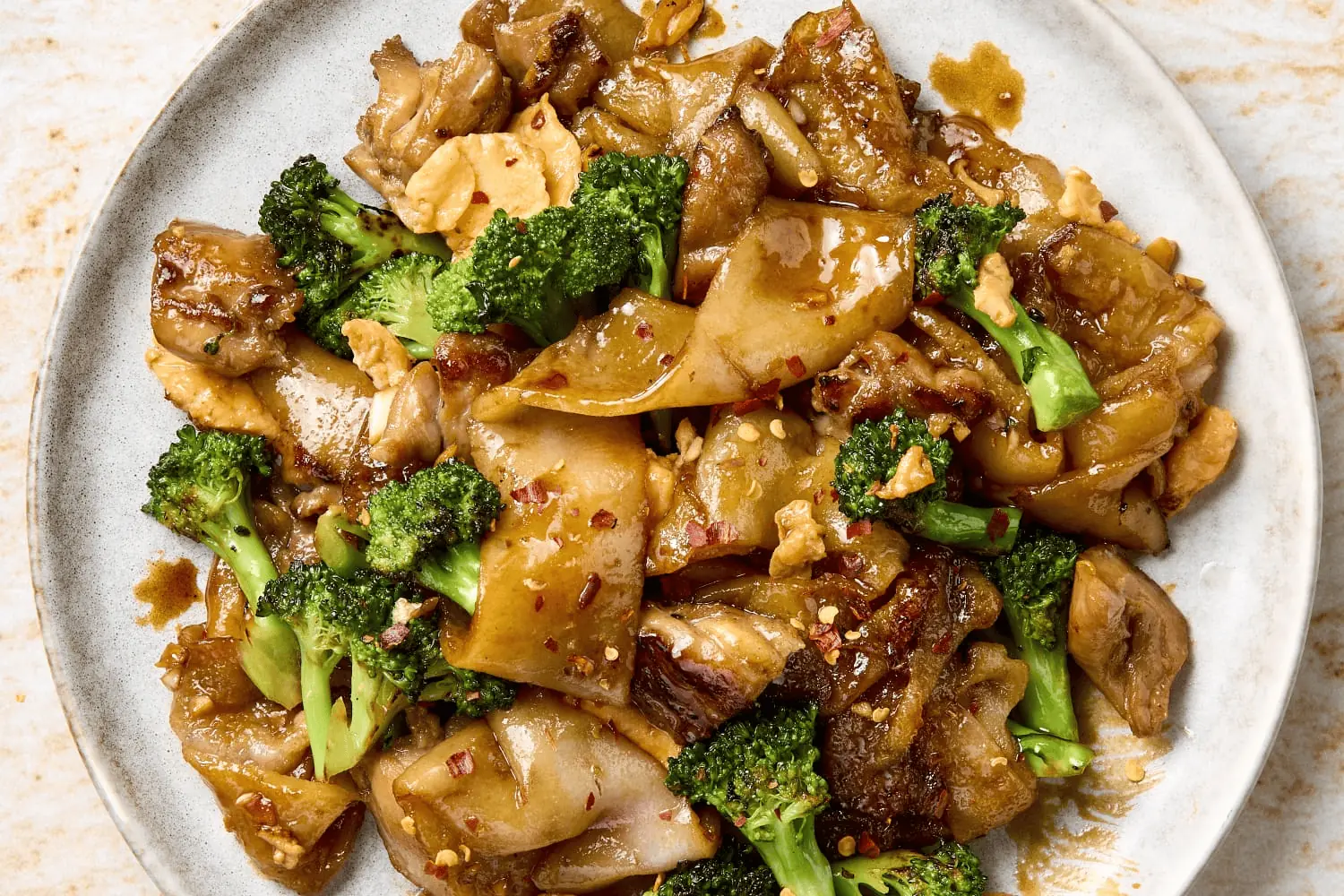
Authentic Pad Thai
Master the iconic Thai stir-fried noodle dish, featuring a perfectly balanced sauce and "wok hei" smoky depth, achieved through precise techniques and authentic ingredients.
Pad Thai Sauce
Noodles
Proteins & Umami Boosters
Aromatics & Vegetables
Garnish (for serving)
Overview
This recipe focuses on recreating authentic Pad Thai, prioritizing the critical balance of sweet, sour, salty, and umami. Key techniques include caramelizing palm sugar for sauce depth, proper noodle hydration for perfect texture, and high-heat, small-batch wok cooking to achieve the coveted ‘wok hei’ and prevent soggy noodles.
Steps
1. Prepare Pad Thai Sauce
In a small saucepan, add the finely chopped palm sugar and 1/4 cup water. Heat over medium-low, stirring until the sugar completely dissolves. Increase heat to medium and allow the sugar to caramelize lightly to a deep golden brown, watching carefully to prevent burning. Immediately remove from heat and stir in the tamarind paste and fish sauce. The mixture will bubble vigorously. Stir until smooth. Taste the sauce: it should hit all four notes—sweet, sour, salty, and umami—without one dominating. Adjust if necessary (add more palm sugar for sweetness, tamarind for sourness, or fish sauce for saltiness/umami). Set aside.
2. Prepare Noodles
Place the dried rice stick noodles in a large bowl and cover with lukewarm (not hot) water. Let them soak for about 45-60 minutes, or until they are very pliable but still firm to the bite—they should bend easily without breaking, but not be mushy. Drain thoroughly. Bring a separate pot of water to a rolling boil. Blanch the soaked noodles in the boiling water for just 15-30 seconds, then immediately drain and rinse with cold water to stop cooking. This prevents clumping. Toss lightly with 1 tablespoon of peanut oil to keep them from sticking, then set aside.
3. Toast Dried Shrimp & Prepare Ingredients
Heat a dry small stainless steel skillet over medium heat. Add the pre-soaked and dried shrimp and toast, stirring frequently, for 5-7 minutes until they are aromatic, fully dry, and slightly crispy. Remove and set aside. Ensure all remaining ingredients (shrimp, tofu, preserved radish, shallots, garlic, bean sprouts, chives, eggs, garnish) are prepped and laid out next to your wok. Mise en place is crucial for high-heat wok cooking.
4. Cook First Batch: Aromatics, Tofu, Shrimp (Servings 1-2)
Heat 3 tablespoons of peanut oil in a wok or large cast iron skillet over high heat until it just begins to smoke. Swirl to coat. Add half of the sliced shallots and half of the minced garlic, stir-frying for 30 seconds until fragrant. Add half of the cubed tofu and half of the preserved radish. Stir-fry for 2-3 minutes until the tofu begins to brown lightly. Add half of the shrimp and stir-fry for 1-2 minutes until they just turn opaque and pink. Do not overcook. Push all ingredients to one side of the wok, creating an empty space.
5. Scramble Egg and Combine with Noodles (First Batch)
Add 1 tablespoon of peanut oil to the empty space in the wok. Crack one egg directly into the hot oil. Let it set for 15-20 seconds, then gently break the yolk and scramble until mostly cooked but still slightly soft. Immediately add half of the blanched noodles over the egg and other ingredients. Pour about 1/2 cup of the prepared Pad Thai sauce evenly over the noodles. Cook undisturbed for 45 seconds to allow the noodles to sear and absorb moisture. Then, vigorously stir-fry, tossing everything together, for 1-2 minutes until the noodles are fully tender and have absorbed most of the sauce, becoming glistening but not wet. Add half of the bean sprouts and half of the garlic chives. Stir-fry for another 30 seconds until the sprouts are tender-crisp.
6. Finish First Batch and Repeat for Second
Stir in half of the toasted dried shrimp. Transfer the finished Pad Thai (first batch) to a serving plate. Wipe the wok clean if necessary. Repeat steps 4 and 5 with the remaining half of all ingredients for the second batch of Pad Thai.
7. Serve and Garnish
Serve the Pad Thai immediately, garnished generously with crushed roasted peanuts, fresh lime wedges, and toasted dried chili flakes (for those who desire more heat). Offer extra fresh bean sprouts and garlic chives on the side for added crunch and freshness, true to Thai street food style.
Notes
- Tamarind Quality Matters: For the best flavor, seek out Thai tamarind paste or tamarind block, which you can reconstitute yourself. Indian tamarind concentrate is often much more acidic and will alter the flavor profile significantly. Adjust sauce sourness by tasting the tamarind paste first.
- Palm Sugar Substitution: While palm sugar provides a unique caramel depth, if unavailable, light brown sugar can be used. However, you will miss some of the nuanced flavor, which is critical for an ‘authentic’ hard-difficulty recipe.
- Achieving Wok Hei: The intense heat is crucial. Do not overcrowd the wok; cooking in two batches ensures the temperature stays high enough for proper searing and prevents the noodles from steaming and becoming soggy. Ensure all ingredients are patted dry before adding to the wok.
- Noodle Troubleshooting: If your noodles are too soft or clumpy, it’s likely due to over-soaking or over-blanching. For the ‘hard’ difficulty, mastering the noodle texture through precise soaking and quick blanching is paramount. They should be pliable but still have a slight al dente chew before stir-frying.
- Umami Boosters are Key: Do not skip the dried shrimp and salted preserved radish. These ‘micro-optimizations’ provide essential layers of umami and texture that define an authentic Pad Thai experience. They are worth seeking out.