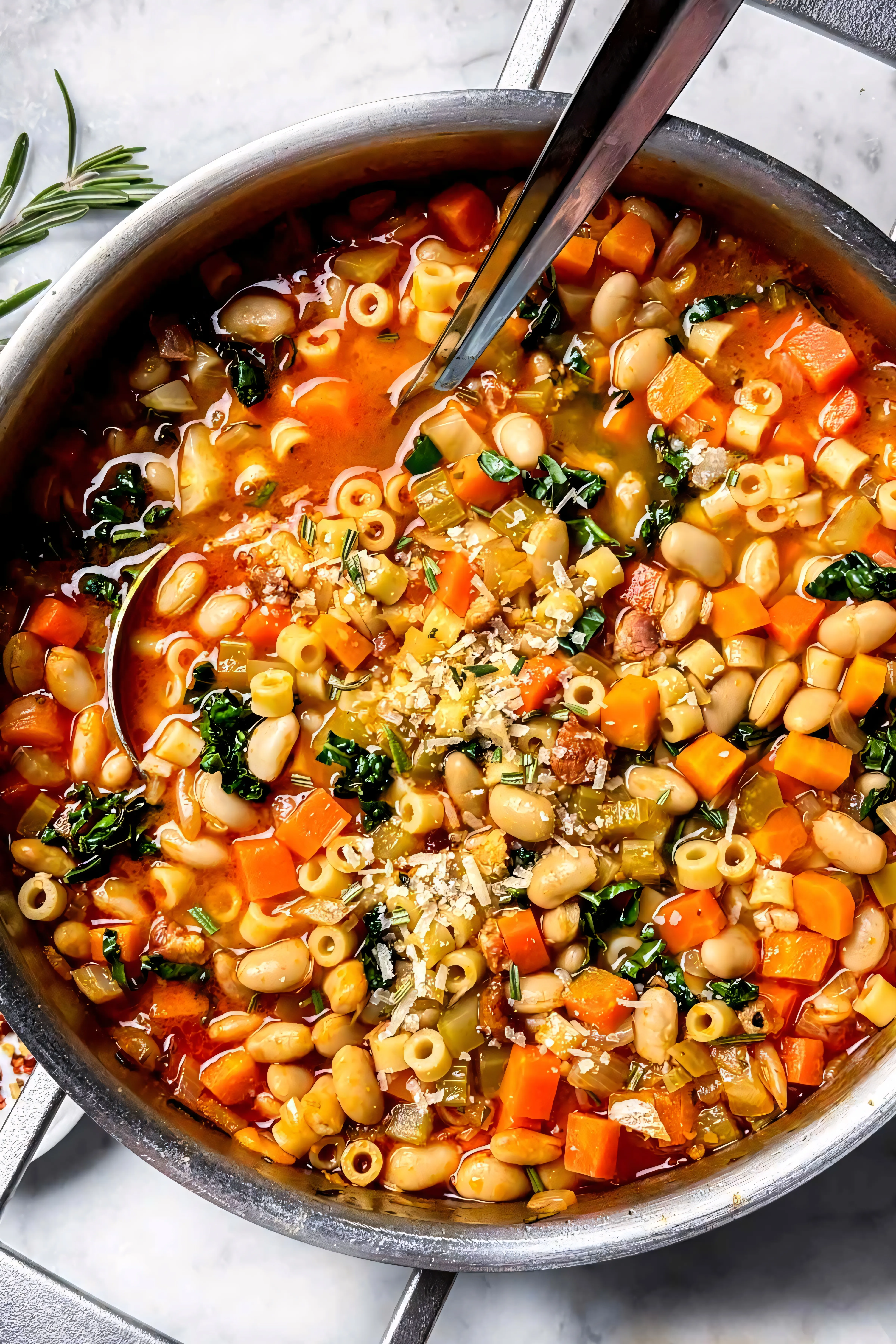
Pasta Fagioli Soup
This hearty, authentic Italian pasta and bean soup, a true 'cucina povera' classic, builds layers of deep savory flavor from a slow-cooked soffritto, rendered pancetta, and perfectly tender dried beans.
For the Beans
For the Soffritto & Soup Base
For the Pasta
For Finishing
Overview
This recipe elevates Pasta Fagioli to a restaurant-quality meal by focusing on foundational techniques. You’ll master a slow-cooked soffritto, render pancetta for a rich base, prepare dried beans from scratch for superior texture, and strategically puree a portion of the beans for luxurious creaminess. Cooking the pasta separately ensures perfect al dente bite and prevents a gummy soup, delivering an authentic Italian experience.
Steps
1. Prepare and Cook Dried Beans
The night before, place the dried cranberry or cannellini beans in a large bowl and cover with at least 3 inches of cold water. Soak overnight for 8-12 hours. The next day, drain the soaked beans and transfer them to a large pot. Cover with 8 cups of fresh water, add 0.5 tsp baking soda (to aid tenderization), and bring to a boil. Immediately reduce heat to a low simmer, ensuring the water barely ripples. Cook until the beans are completely fork-tender but still hold their shape, about 1.5 to 2 hours. Stir occasionally to prevent sticking. Towards the end of cooking, season lightly with salt. Reserve all of the bean cooking liquid (bean liquor) as it will add significant flavor and thickness to the soup.
2. Build the Soffritto Foundation
Heat 2 tablespoons of olive oil in a large Dutch oven over medium heat. Add the diced pancetta and cook, stirring occasionally, until the fat has rendered and the pancetta is lightly browned and crispy, about 5-7 minutes. Remove the pancetta with a slotted spoon and set aside, leaving the rendered fat in the pot. Add the finely diced onions, carrots, and celery to the Dutch oven. Reduce the heat to medium-low and cook slowly, stirring occasionally, until the vegetables are very soft and translucent but not browned, about 10-15 minutes. This slow cooking is crucial for developing deep, sweet flavors.
3. Layer Aromatics and Liquids
Stir in the minced garlic, tomato paste, and red pepper flakes into the softened soffritto. Cook, stirring constantly, for 2 minutes, allowing the tomato paste to caramelize and deepen in color. Pour in the chicken broth and 2.5 cups of water. Add the Parmesan rind, fresh rosemary sprig, and bay leaf. Bring the soup to a gentle simmer. Once simmering, reduce the heat to low, cover, and let it cook for 20 minutes, allowing the flavors to meld and the Parmesan rind to infuse the broth.
4. Process Beans for Creaminess
After the soup base has simmered, remove the Parmesan rind, rosemary sprig, and bay leaf. Add all of the cooked beans (from Step 1) and 1.5 cups of their reserved cooking liquid to the Dutch oven. Using an immersion blender, carefully blend about half of the beans directly in the pot until creamy. Leave the other half intact for texture. If you don’t have an immersion blender, scoop out about 1.5 cups of beans and 0.5 cup of liquid, blend in a food processor until smooth, then return to the pot. Add more of the reserved bean cooking liquid if the soup seems too thick; it should be hearty but still soupy.
5. Cook Pasta Separately
While the soup is simmering, bring a separate large pot of salted water to a rolling boil. Add the ditalini pasta and cook according to package directions, but remove it about 1-2 minutes before it reaches al dente. The pasta should still have a slight bite to it. Drain the pasta immediately. This prevents the pasta from absorbing all the soup’s liquid and becoming mushy.
6. Combine, Finish, and Serve
Add the par-cooked, drained ditalini pasta to the Dutch oven with the soup. Stir in the reserved crispy pancetta, 1 cup of freshly grated Parmigiano-Reggiano cheese, and the finely chopped fresh parsley. Stir until the cheese is melted and the pasta is fully heated through, absorbing some of the liquid. Taste the soup and season generously with kosher salt and freshly ground black pepper. Off the heat, stir in the fresh lemon juice and the remaining 2 tablespoons of extra virgin olive oil. Serve hot, with an additional drizzle of olive oil, a sprinkle of fresh parsley, and extra Parmigiano-Reggiano cheese for garnish.
Notes
- Bean Substitution: For this hard-difficulty recipe, dried cranberry or cannellini beans are recommended for authentic flavor and texture. If time is a constraint, you can substitute with two 15-ounce cans of cannellini beans, drained and rinsed. In this case, skip the soaking and initial cooking steps. Use 1.5 cups of vegetable broth or water in place of the reserved bean cooking liquid, and add it to the soup base.
- Vegetarian/Vegan Adaptation: To make this soup vegetarian, omit the pancetta. You can add 1 teaspoon of smoked paprika with the tomato paste for a smoky note, or sauté 4 ounces of finely chopped cremini mushrooms with the soffritto vegetables. Substitute chicken broth with vegetable broth. For a vegan version, also omit the Parmesan rind and the finishing Parmigiano-Reggiano, opting for a vegan Parmesan alternative or nutritional yeast for umami.
- Gluten-Free Option: Use your favorite gluten-free ditalini or small pasta shape. It is even more critical to cook gluten-free pasta separately, as it tends to break down and become gummy faster than wheat pasta. Under-cook by at least 2 minutes from package instructions, as it will continue to soften in the hot soup.
- Storage: Pasta fagioli is best enjoyed fresh. If storing leftovers, be aware that the pasta will continue to absorb liquid and soften. Store the soup and pasta separately if possible, or expect to thin the leftovers with additional broth or water when reheating. It can be refrigerated for up to 3 days.