Minessale's Pizza
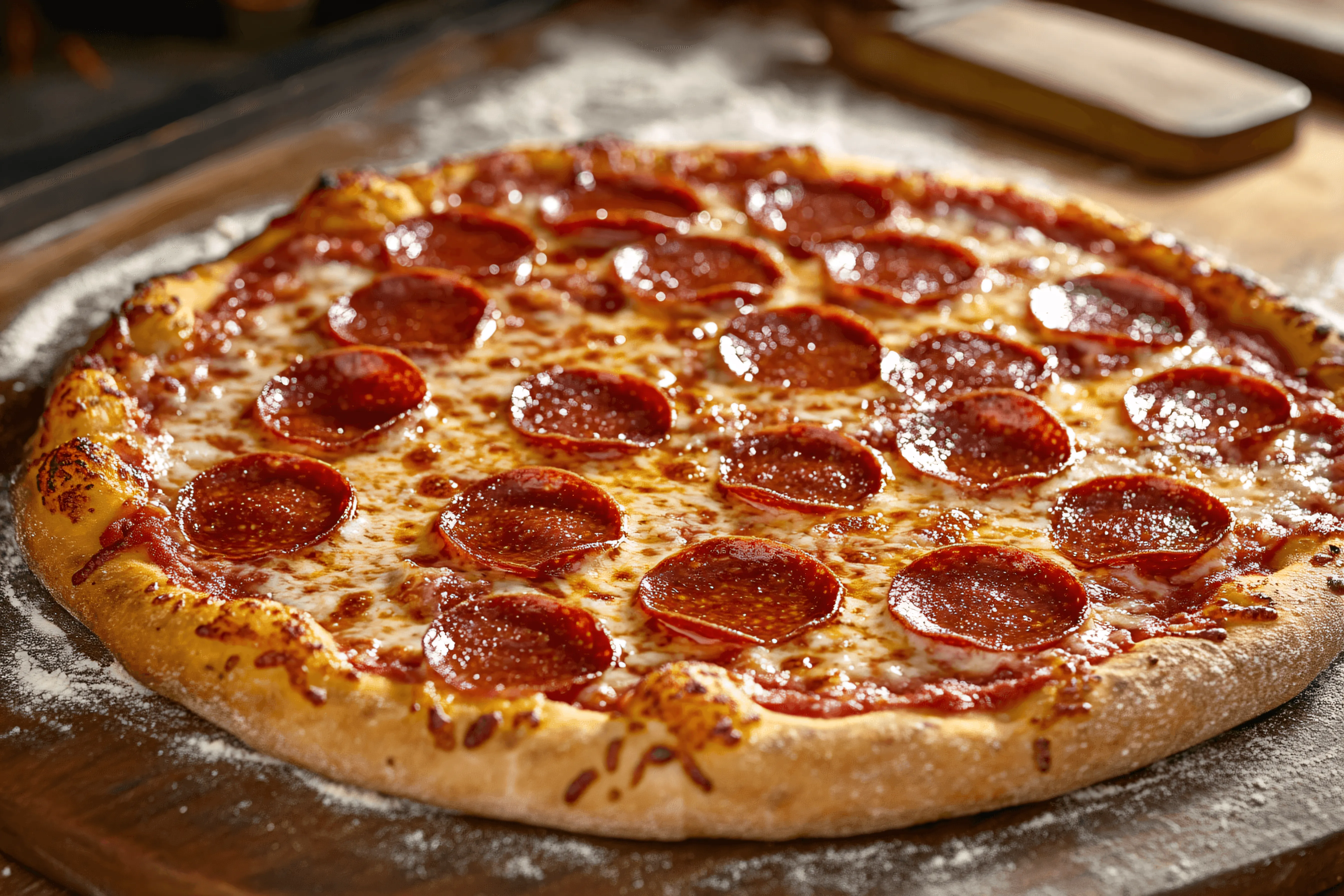
Neo-Neapolitan hybrid — 72-hour cold-fermented malt dough, raw crushed tomato sauce, a hidden Parmigiano layer under the mozzarella, baked on steel under a broiler.
Dough (3 twelve-inch pies)
Raw Sauce (all 3 pies)
Toppings (per pie)
Overview
This is a neo-Neapolitan hybrid built from research across 8 of the most respected pizza authorities — Kenji Lopez-Alt, Tony Gemignani, Chris Bianco, Ken Forkish, Dan Richer, and more. The dough uses diastatic malt powder whose active enzymes produce sugars throughout a 72-hour cold ferment, delivering deeper browning and more complex flavor than table sugar ever could. The sauce is raw crushed tomatoes — no cooking, the way Una Pizza Napoletana and Pizzeria Bianco do it. The secret move: a hidden layer of Parmigiano-Reggiano goes under the mozzarella for umami that hits before the cheese does. Mix Thursday evening, bake Saturday.
Steps
1. Mix the dough (Thursday evening)
Combine flour and malt powder in a large bowl and whisk to distribute evenly. Add yeast and whisk again. Pour in the water and stir with a fork or your hand until no dry flour remains — a shaggy, rough mass is fine. Cover and rest 20–30 minutes. This autolyse lets flour hydrate passively and begins gluten formation without kneading.
2. Add salt and oil
Sprinkle salt over the dough and drizzle olive oil on top. Squeeze and fold until fully incorporated, about 1–2 minutes. Then do 3–4 stretch-and-folds in the bowl: grab one side, stretch up, fold over center. Rotate 90° and repeat. The dough will tighten and smooth out. Cover.
3. Bulk rest and second fold
Rest covered at room temperature for 30 minutes. Do one more set of 3–4 stretch-and-folds — the dough should feel noticeably smoother and more elastic. Cover and rest another 30 minutes.
4. Divide, ball, and cold-ferment (72 hours)
Turn dough out onto a clean, unfloured surface. Divide into 3 equal pieces (~258g each). Ball each piece by tucking edges underneath repeatedly, rotating on the counter to create surface tension. Pinch seam shut on the bottom. Place seam-side down in a lightly oiled container, spaced apart. Cover tightly with plastic wrap. Refrigerate immediately — cold-ferment 48 to 72 hours. 72 hours is the target for maximum flavor.
5. Pull dough (Saturday, 1.5–2 hours before baking)
Remove dough balls from the fridge and leave covered at room temperature. The dough needs to reach 65–75°F so the gluten relaxes and stretching is easy. Cold dough snaps back and tears.
6. Preheat oven and steel (60 minutes)
Place baking steel on the second rack from the top, 6–7 inches from the broiler element. Electric ovens: preheat at 450°F convection for 60 minutes. Gas ovens: 500°F convection for 60 minutes. The steel needs this entire time to fully saturate with heat — do not shortcut this.
7. Make the raw sauce
Pour tomatoes into a bowl. Crush by hand, squeezing through your fingers until coarse and chunky — no large whole pieces remain. Add a pinch of salt. Taste a spoonful raw: it should taste bright and tomatoey on its own. Use ~70g per pie. Bring to room temp before spreading — cold sauce on raw dough creates a gummy undercooked layer.
8. Stretch the dough
Dust your work surface lightly with flour. Press the dough ball gently from center outward with fingertips, leaving a 1-inch border untouched for the cornicione. Flip and repeat. Pick it up, drape over your knuckles, and let gravity stretch it while you rotate — working from center out. Target 12 inches. Transfer immediately to a semolina-dusted peel.
9. Build the pizza (work fast, under 2 minutes)
Spread ~70g sauce with the back of a spoon, leaving the border clean. Sprinkle Parmigiano directly over the sauce — this is the hidden umami layer, the signature move. Distribute mozzarella evenly over the top. You should see hints of red sauce through the cheese. Shimmy the peel to confirm the pizza slides freely.
10. Bake (broiler method, 4–6 minutes)
Switch oven to BROIL HIGH. Wait 5 minutes for the broiler element to fully heat. Launch the pizza onto the steel with a quick, confident forward thrust. Broil 90–120 seconds, watching for cheese to bubble aggressively and the cornicione to puff and blister. Switch to convection bake (450°F electric / 500°F gas), rotate 180°, and bake 2–4 more minutes until the bottom is deeply golden-brown and the crust sounds hollow when tapped.
11. Finish and rest
Slide pizza onto a cutting board. Immediately drizzle olive oil over the top and scatter torn basil. Sprinkle flaky sea salt on the puffy cornicione edges. Wait 2–3 minutes before cutting — this lets the cheese set so it doesn’t slide off the first slice. Allow 5–10 minutes for the steel to reheat before launching the next pie.
Notes
- The malt is the signature. Diastatic malt powder’s active enzymes produce sugars throughout the 72-hour ferment — deeper browning and more complex flavor than sugar ever could. Store it in the freezer. Available on Amazon or King Arthur’s website.
- Yeast measurement: 0.5g is tiny. A precision scale accurate to 0.1g (~$10–15) is strongly recommended. Without one, a level ⅛ teaspoon is the closest approximation.
- The dough is forgiving. Overproofed? Degas, reshape, let it rise again. Research shows dough survives this up to 10 times before meaningful quality loss.
- Baking steel vs. stone: A baking steel ($70–90) is the single biggest upgrade for home pizza. Steel conducts heat 18x faster than ceramic stone, producing crispier bottoms in shorter bake times.
- Session planning: 1 dough ball per person plus 2–3 extras. Stagger balls out of the fridge in batches so later pies aren’t overproofed while you bake the first ones. The first pie is often the worst — the steel needs a session to settle in.
- Rule of 22: 22g of dough per inch of diameter. These 258g balls make 12-inch pies. For 14-inch, scale to ~308g per ball.
- Never use pre-shredded mozzarella. It’s coated in anti-caking starch that prevents proper melting. Shred fresh from a block.
- Reheating: Cast iron skillet, cold start, medium-low until bottom crisps (~3 min). Add 2–3 drops of water to pan (not on pizza), cover with lid, cook 1–2 more minutes. Nearly as good as fresh.